
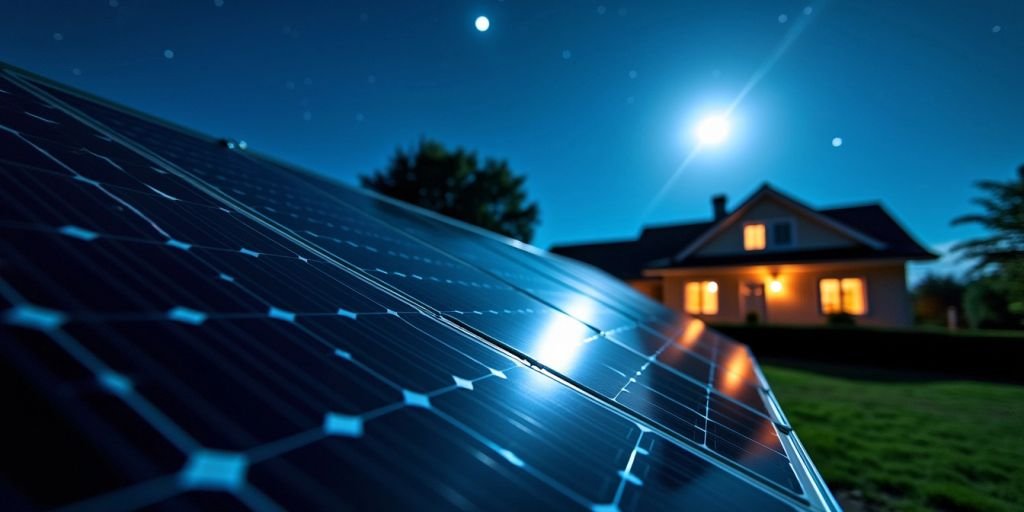
Solar energy has become an increasingly popular renewable energy source in Australia, helping homeowners and businesses reduce their reliance on traditional power grids. However, one common question arises: How do solar systems operate at night when there is no sunlight? Understanding how solar panels function and what happens when the sun goes down is crucial for maximizing energy efficiency and planning for consistent power supply.
- Solar panels do not generate electricity at night, but you can store surplus energy is a battery and use it when the sun is no longer shining.
- Selling the surplus kWh generated to the grid helps offset your electricity consumption at night.
- Regular maintenance and proper installation can help maximise the efficiency of your solar power system.
What Happens at Night?

Solar Panel Functionality After Sundown
Since solar panels require sunlight to generate electricity, they stop producing power at night. However, this does not mean that solar-powered homes or businesses in Australia are left without electricity.
Solar Battery’s usage at Night-time
To use solar energy at night, many homeowners opt for solar batteries. These batteries store excess energy generated during the day, allowing you to use it when the sun goes down. Here’s how they work:
- Charge during the day: The battery stores energy when solar panels are active.
- Discharge at night: The stored energy is used to power your home after sundown.
- Backup power: In case of grid outages, batteries can provide essential power.
FiT: Feed-in Tariff
Feed-in tariff (or Net metering) allows homeowners to send excess solar energy back to the grid during the day and offset electricity costs. What happens:
- Generate energy: Your solar panels produce energy during the day.
- Send excess to the grid: Any unused energy is sent back to the grid, earning you credits.
- Draw from the grid at night: The credits you receive from your retailer will be applied to the charges for your nighttime consumption.
While solar panels do not work at night, solar batteries and Feed-in Tariff provide effective solutions to ensure you have power when you need it most.
Maximising Solar System Efficiency
Impact of Panel Orientation and Shading
The way your solar panels are positioned can greatly affect their efficiency. Key points to consider:
- North-facing panels generally produce the most energy.
- East and west-facing panels can still be effective, especially if your household uses more energy in the morning or late afternoon.
- Shading from trees or buildings can significantly reduce output. Regularly check for any obstructions.
| Panel Orientation | Energy Output (%) |
| North | 100% |
| East | 85% |
| West | 85% |
| South | 75% |
Importance of Regular Maintenance
To keep your solar system running well, regular maintenance is essential. Here are some tips:
- Clean your panels to remove dirt and debris. This helps them absorb more sunlight.
- Inspect for damage regularly, especially after storms.
- Check connections to ensure everything is secure and functioning.
Regular maintenance can help ensure your solar panels operate at their best, maximising energy production.
Choosing the Right Inverter for Optimal Performance
The inverter is a crucial part of your solar system. Here’s what to look for:
- High efficiency ratings: Look for inverters with efficiency above 95%.
- Compatibility: Ensure the inverter works well with your solar panels.
- Monitoring features: Some inverters allow you to track performance, helping you identify issues quickly.
By focusing on these areas, you can significantly improve the efficiency of your solar power system, ensuring you get the most out of your investment. Keeping your solar panels clean ensures they soak up as much sunlight as possible to achieve maximum efficiency.
Common Issues with Solar Systems and Solutions

Dealing with Shading Problems
Shading can significantly reduce the efficiency of your solar panels. Even a small amount of shade can cause a drop in energy production. Here are some ways to tackle shading issues:
- Trim nearby trees to prevent future shading.
- Install solar panel optimisers to maximise output from shaded panels.
- Consider relocating panels to a sunnier spot if possible.
Troubleshooting Inverter Issues
Inverters are crucial for converting solar energy into usable power. If your inverter isn’t working properly, it can lead to energy loss. Here’s how to troubleshoot:
- Check the display for error messages.
- Inspect connections to ensure everything is secure.
- Reset the inverter if necessary, following the manufacturer’s instructions.
Understanding Efficiency Losses
Efficiency losses can occur due to various factors.
| Factor | Impact on Efficiency |
| Dust and dirt on panels | Up to 25% loss |
| Age of the system | Gradual decline |
| Temperature extremes | Can reduce output |
Regular maintenance is essential to keep your solar system running efficiently. Ignoring small issues can lead to bigger problems down the line.
Future of Solar Technology
Advancements in Solar Panel Technology
The future of solar panels looks bright with innovations that promise to change how we harness energy. New materials, like thin-film perovskite, are being developed to reduce the need for traditional silicon panels. This could lead to significant cost savings and a decrease in the need for large solar farms.
Potential of Night-time Solar Panels
Researchers are exploring the idea of solar panels that can generate power at night. These new devices, often called anti-solar cells, work by emitting heat instead of absorbing sunlight. This means they can produce energy even when the sun isn’t shining, potentially balancing the power grid throughout the day and night.
Innovations in Solar Battery Storage
Solar battery technology is also advancing rapidly. Modern batteries can store more energy and have longer lifespans. This means households can use stored solar energy at night, reducing reliance on the grid. Here are some key benefits of these innovations:
- Increased efficiency: New batteries can store more energy.
- Longer lifespan: Many batteries now last over 10 years.
- Cost-effective: Prices are dropping, making solar energy more accessible.
| Technology Type | Current Efficiency | Future Potential |
| Traditional Solar Panels | 15-20% | 25-30% |
| Anti-Solar Cells | 0% (night only) | 10-15% |
| Solar Batteries | 80-90% | 95%+ |
Solar panels don’t generate electricity at night because they rely on sunlight to work. However, you can still use stored energy by installing a solar battery, which saves excess power collected during the day. If you don’t have a battery, net metering allows you to send extra energy back to the grid during the day and use it at night. While solar panels don’t produce energy after dark, these methods ensure you still have power when you need it.
Frequently Asked Questions
Do solar panels generate power at night?
No, solar panels don’t produce electricity at night because they need sunlight to work. However, you can use solar energy stored during the day.
How can I use solar energy at night?
You can use a solar battery to store energy from the day, or you can use net metering to draw power from the grid at night.
What is net metering?
Net metering allows you to send excess solar power to the grid during the day and receive credits to use that energy at night.


