
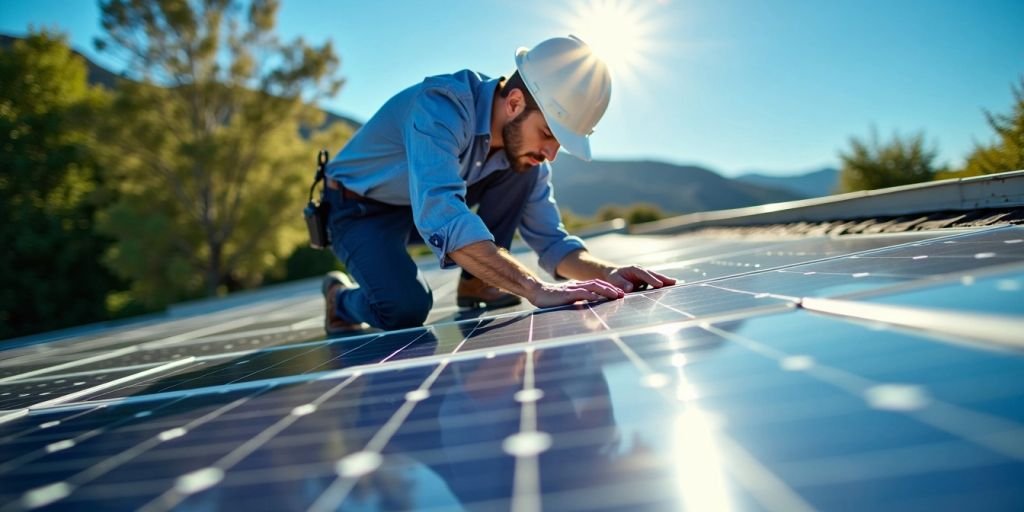
Solar energy is a powerful way to reduce electricity costs and contribute to a cleaner environment. However, to get the most out of your solar panels, regular maintenance is essential.
- Regular cleaning of solar panels helps maintain efficiency and performance.
- Monitoring energy output can help identify issues early and optimise performance.
- Understanding your warranty can save you money on repairs and replacements.
Routine Solar Maintenance

Importance of Regular Cleaning
Keeping your solar panels clean is essential for their efficiency. Regular cleaning can boost energy production by up to 15%. Dust, dirt, and debris can block sunlight, reducing the amount of energy your system generates. To maintain optimal performance, it’s recommended to clean your panels at least twice a year, especially in areas with high dust or pollen.
Seasonal Maintenance Tips
- Schedule Cleanings: Aim for cleaning at the end of fall and the start of winter.
- Choose the Right Time: Clean early in the morning when the panels are cool. Avoid cleaning during hot weather to prevent thermal stress.
- Visual Inspections: Before cleaning, check for any visible damage like cracks or loose connections.
Hiring Professional Services
If you’re unsure about cleaning your solar panels yourself, consider hiring professionals. They have the right tools and experience to ensure your panels are cleaned safely and effectively. Look for services that are experienced in solar maintenance to avoid any damage.
Regular maintenance not only extends the life of your solar panels but also maximises your energy savings.
By following these tips, you can ensure your solar system remains efficient and effective for years to come. Remember, a little effort goes a long way in solar panel maintenance!
Monitoring Solar System Performance
Using Monitoring Systems
Monitoring your solar system is essential for ensuring it operates efficiently. Integrating a monitoring system allows you to track energy production daily and over time. This helps you understand how external factors affect your panels’ performance. Some benefits of using monitoring systems:
- Real-time performance tracking
- Alerts for any malfunctions
- Historical data analysis to identify trends
Identifying Performance Issues
If you notice a drop in energy output, it could indicate a problem. Common signs include:
- Decreased energy production compared to previous months.
- Alerts from your monitoring system.
- Physical obstructions like debris or shading.
Benefits of Regular Monitoring
Regular monitoring can lead to improved efficiency and fewer issues. Here are some key advantages:
- Early detection of problems, preventing costly repairs.
- Better understanding of your system’s performance.
- Enhanced energy savings over time.
By keeping an eye on your solar system, you can ensure it continues to deliver clean energy efficiently.
Handling Repairs and Warranties

Common Repair Needs
Solar panels are generally reliable, but sometimes they may need repairs. Common issues are:
- Physical damage: Cracks or breaks from hail or falling branches.
- Electrical faults: Issues with wiring or inverters.
- Performance drops: If your panels aren’t producing as much energy as expected.
Understanding Your Warranty
Most solar panels come with two types of warranties:
- Product warranty: Covers defects in materials and workmanship, usually lasting 10-25 years.
- Performance warranty: Guarantees a certain level of energy production over time, often lasting 25 years.
Make sure to read your warranty carefully to understand what is covered and for how long.
When to Call a Professional
If you notice any of the following, it’s time to call a professional:
- Visible damage: Cracks or broken panels.
- Significant performance drop: If your energy output is consistently lower than expected.
- Electrical issues: Any signs of burning or unusual noises from the inverter.
Remember: It’s best to hire a professional for repairs. Attempting to fix solar panels yourself can be dangerous and may void your warranty. If your panels are very dirty or hard to reach, consider using a professional cleaning service. Ask your installer about having your panels cleaned during a system service.
Optimising Solar Panel Efficiency
Best Practises for Panel Placement
To get the most out of your solar panels, proper placement is key. Here are some tips:
- Angle: Install panels at an angle that captures the most sunlight.
- Orientation: Face them towards the sun, ideally north in Australia.
- Space: Ensure there’s enough space between panels to avoid shading.
Dealing with Shading Issues
Shading can significantly reduce the efficiency of your solar system. Here’s how to manage it:
- Trim Trees: Regularly cut back any trees or plants that may cast shadows.
- Panel Layout: Consider using optimisers or microinverters to minimise the impact of shading.
- Monitor Performance: Use a monitoring system to identify when shading occurs.
Maximising Energy Production
To ensure your solar panels are producing as much energy as possible, follow these steps:
- Regular Cleaning: Clean panels every few months to remove dirt and debris.
- Check for Damage: Inspect for cracks or loose connections that could affect performance.
- Professional Help: Hire experts for maintenance and repairs when needed.
Keeping your solar panels in top shape can increase energy production by up to 15%.
Final Thoughts on Solar Maintenance
Keeping your solar panels in good shape is essential for getting the most out of them. Regular maintenance, like cleaning and checking for any issues, can help your panels work better and last longer. Remember to schedule cleanings based on your local weather and how dirty your panels get. By taking care of your solar system, you not only save money on your electricity bills but also help the environment. If you notice any problems, don’t hesitate to call a professional. With the right care, your solar panels can provide you with clean energy for many years.
Frequently Asked Questions
How often should I clean my solar panels?
It’s good to clean your solar panels at least twice a year. If you live in a dusty area, you might need to do it more often, like every three months.
What should I do if my solar panels aren’t working well?
If your solar panels are not producing enough energy, check for dirt or debris on them. You can also use a monitoring system to see if there’s a problem and then call a professional if needed.
Do I need to hire someone for solar panel maintenance?
For simple cleaning, you can do it yourself. But for any serious repairs or checks, it’s best to hire a professional to ensure everything is safe and working well.


