
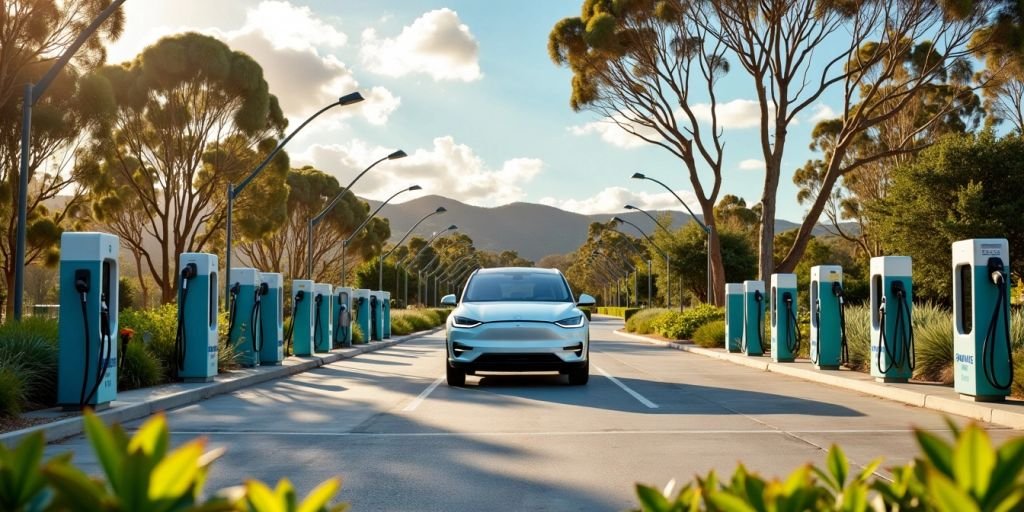
Electric vehicles (EVs) are becoming more popular in Australia, and with this rise comes the need for reliable charging locations. Knowing where to charge your EV can make a big difference in your driving experience. This article will explore popular charging spots across the country, the types of chargers available, key players in the charging network, and tips for efficient charging.
Key Takeaways
- Australia has an expanding network of EV charging stations, especially in major cities like Sydney, Melbourne, and Brisbane.
- There are three main types of EV chargers: Level 1 (slow), Level 2 (moderate), and Level 3 (fast), catering to different needs and situations.
- Major players in the EV charging scene include Tesla’s Supercharger network, Chargefox, and EVIE Networks, each offering unique features and services.
Popular Charging Locations for Electric Vehicles in Australia
Sydney’s Charging Infrastructure
Sydney is leading the way in electric vehicle (EV) charging. The city has numerous charging stations, including:
- Tesla Superchargers
- Public charging points at shopping centres
- Fast chargers at major transport hubs
Sydney’s EV charging network is expanding rapidly, making it easier for drivers to find a charge.
Melbourne’s EV Charging Network
Melbourne boasts a well-developed EV charging network. Key features include:
- Over 200 public charging stations
- Fast chargers located in popular areas
- Partnerships with local businesses to install chargers
The city is committed to increasing its charging infrastructure to support the growing number of electric vehicles.
Brisbane’s Public Charging Stations
Brisbane is also enhancing its EV charging options. Notable aspects include:
- A mix of Level 2 and Level 3 chargers
- Charging stations at parks and recreational areas
- A comprehensive map of charging stations available for users
Perth’s EV Charging Solutions
Perth is making strides in EV charging with:
- A growing number of public charging stations
- Fast chargers at key locations like airports and shopping centres
- Initiatives to encourage businesses to install chargers
In summary, Australia’s major cities are investing in EV charging infrastructure to support the increasing demand for electric vehicles.
The EV charging stations Australia map is a comprehensive guide to finding EV charging stations across the country, including Tesla stations.
Types of Electric Vehicle Chargers Available

Electric vehicles (EVs) require different types of chargers to meet various needs. Understanding these types can help you choose the right one for your situation.
Level 1 Chargers: Basic Home Charging
Level 1 chargers use a standard power point (10-15 Amp) and are often found in homes. They are simple to use and typically add about 10 to 20 km of range per hour. However, they are not suitable for fully recharging an EV overnight.
Level 2 Chargers: Faster Home and Public Charging
Level 2 chargers are more powerful, providing up to 22 kW (32 Amp). They are commonly installed in homes, workplaces, and public areas. These chargers can add 40 to 100 km of range per hour, making them ideal for daily use and overnight charging.
Level 3 Chargers: Rapid Public Charging
Level 3 chargers, also known as DC fast chargers, can deliver between 25 kW to 350 kW. They are typically found at commercial locations and can recharge some EVs in just 10 to 15 minutes. This makes them perfect for long trips or quick stops.
Choosing the Right Charger for Your Needs
When selecting a charger, consider the following:
- Charging speed: How quickly do you need to recharge?
- Location: Will you charge at home, work, or on the road?
- Vehicle compatibility: Ensure your EV can use the charger type.
Note: The Type 2 connector is the standard AC plug type for electric cars in Australia today, used by all electric vehicles.
Understanding these options will help you make an informed decision about your EV charging needs.
Key Players in Australia’s EV Charging Network
Australia’s electric vehicle (EV) charging network is growing rapidly, with several key players leading the charge. These companies are crucial for expanding the infrastructure needed for EVs.
Tesla’s Supercharger Network
Tesla’s Supercharger network is the most recognised in Australia. It offers fast charging stations strategically located along major travel routes. This network allows Tesla owners to recharge quickly, adding significant range in a short time.
Chargefox: Australia’s Largest Network
Chargefox is known as the largest public EV charging network in Australia. They provide a mix of fast and ultra-rapid chargers, making it easier for EV drivers to find charging stations across the country.
EVIE Networks: Fast Charging Solutions
EVIE Networks focuses on building a reliable fast charging network powered by 100% renewable energy. They aim to provide quality charging solutions for homes, workplaces, and public areas, ensuring that EV drivers have access to efficient charging options.
JET Charge: Leading Installation Services
JET Charge is a major player in the installation of EV charging infrastructure. They partner with various automotive brands and have deployed more charging stations than any other provider in Australia. Their expertise ensures that both residential and commercial charging needs are met effectively.
Summary Table of Key Players
| Company | Type of Service | Key Feature |
| Tesla | Supercharger Network | Fast charging along travel routes |
| Chargefox | Public Charging Network | Largest network in Australia |
| EVIE Networks | Fast Charging Solutions | 100% renewable energy |
| JET Charge | Installation Services | Extensive deployment of charging stations |
The driving the nation fund will expand the national rollout of EV charging and hydrogen refuelling infrastructure as well as support investment in fleets.
These companies are essential for the growth of EV infrastructure in Australia, making it easier for drivers to transition to electric vehicles.
Tips for Efficient Electric Vehicle Charging

Maximising Battery Life
To keep your electric vehicle (EV) battery healthy, it’s important to avoid letting it drop too low. Keeping your charge between 20% and 80% can help prolong battery life. Here are some tips:
- Charge regularly to avoid deep discharges.
- Use a smart charger that can manage charging times.
- Avoid extreme temperatures when charging.
Cost-Effective Charging Strategies
Charging your EV can be expensive if not managed well. Here are some strategies to save money:
- Charge during off-peak hours when electricity rates are lower.
- Look for free charging stations in your area.
- Consider installing solar panels to power your charger.
Using Solar Power for EV Charging
Using solar energy to charge your EV is a great way to save money and reduce your carbon footprint. Here’s how:
- Install solar panels on your roof.
- Use a solar inverter to convert solar energy into usable power for your EV.
- Monitor your energy usage to optimise charging times.
Understanding Charging Connectors
Different EVs use different types of connectors. Familiarise yourself with the types:
- Type 1: Common in older models.
- Type 2: Widely used in Europe and Australia.
- CCS: Fast charging option for many new EVs.
Remember, for all other locations during your journey, recharge to 80%. This is more time efficient as charging speeds drop considerably after 80% charge.
Conclusion
In summary, Australia is rapidly expanding its electric vehicle charging network. With many charging stations available across major cities like Sydney, Melbourne, and Brisbane, drivers can easily find a place to recharge. Tesla’s Supercharger stations are particularly popular, offering fast charging options that can give a significant range boost in a short time. As more people switch to electric vehicles, we can expect even more charging locations to appear, making it easier for everyone to travel. Whether you’re at home or on the road, charging your electric car is becoming more convenient than ever.
Frequently Asked Questions
Where can I find charging stations for electric vehicles in Australia?
You can find charging stations in major cities like Sydney, Melbourne, Brisbane, and Perth. Many shopping centres, public car parks, and roadside locations also have chargers.
What types of chargers are available for electric vehicles?
There are three main types of chargers: Level 1 (slow charging at home), Level 2 (faster home and public charging), and Level 3 (rapid public charging). Each type has different charging speeds.
How do I know which charger to use for my electric vehicle?
Most electric vehicles in Australia use Type 2 connectors for AC charging and CCS for DC fast charging. Check your vehicle’s manual to find out which charger is best for you.


